Navratri is one of the most widely observed festivals in India, spread across nine nights dedicated to the nine forms of Goddess Durga - the Navadurga. From Gujarat's swirling garba and dandiya nights to Bengal's grand Durga Puja pandals and North India's Ramlila leading up to Dussehra, the festival changes its face across regions but keeps one thing constant: devotion expressed through upvas, or fasting.
For many households, though, the actual rules of what to eat, what to avoid, and when to break the fast remain genuinely confusing - and they shift slightly from family to family and region to region.
This guide breaks down Navratri fasting in plain terms, so you can observe your vrat with confidence and eat well while doing it.
What Is Navratri Fasting and Why Is It Observed?
Navratri fasting is a devotional practice meant to honour Goddess Durga and her nine forms; each worshipped on a specific day of the festival. Culturally, it is seen as a period of purification - a way to discipline the body and quiet the mind before the goddess is invoked in her fiercer and gentler forms alike.
The diet followed during these nine days is called a sattvic diet: light, pure, and free of ingredients believed to cause restlessness or dullness, such as onion, garlic, and regular table salt.
This is less about strict deprivation and more about eating simply, seasonally, and mindfully for over a week.
Navratri Fasting Rules: The Basics
While practices vary by community - Gujarati, Marwari, Bengali, and Maharashtrian households all have their own nuances - the widely followed core rules are:
No regular grains: wheat, rice, and refined flour are avoided.
No lentils, pulses, or legumes of any kind.
No onion, garlic, or regular iodised table salt - only sendha namak (rock salt) is used.
No non-vegetarian food or alcohol.
Approved flours instead: kuttu (buckwheat), singhare ka atta (water chestnut flour), and rajgira (amaranth).
Sabudana (sago/tapioca pearls), fresh fruits, milk and milk products, and select vegetables like potato, sweet potato, pumpkin, and cucumber are allowed.
Some who observe stricter Nirjala or fruit-only vrat skip grains entirely and live on fruit, milk, and water.
Navratri Fast: First and Last Day Rules
The first day, Pratipada, is when the ghat sthapana or kalash sthapana takes place - the ritual installation of the sacred pot that marks the goddess's presence for the nine days. Many devotees begin their fast on this day and either continue it unbroken for all nine days or fast only on the first and last day, breaking the routine on the days in between.
This 'first and last day' pattern is common among people balancing work and family commitments who cannot sustain a full nine-day vrat.
The last day of fasting is tied closely to Ashtami and Navami - the eighth and ninth days - which are considered the most spiritually significant. This is when Kanya Pujan (also called Kanjak in North India) is performed: nine young girls, representing the Navadurga, are invited home, their feet are washed, and they are served a meal of puri, halwa, and chana before being given gifts.
Many families conclude their own fast only after this ritual is complete, treating it as the formal close of their vrat.
When to Break the Navratri Fast
Most people break their fast on Navami (the ninth day) after completing Kanya Pujan, or on Vijayadashami (Dussehra), the tenth day, which marks Durga's victory over the demon Mahishasura.
The exact timing depends on regional and family tradition, some break it the moment the Kanya Pujan meal is served, others wait until the Navami puja concludes in the evening, and some extend it to Dashami morning.
There is no single 'correct' hour; local panchang timings and family custom generally decide it, so it is worth checking with your family priest or a regional calendar if you want a precise muhurat for your area.
Navratri Food List: What You Can and Cannot Eat
Foods Allowed During Navratri Vrat
Fruits: banana, apple, pomegranate, papaya, and coconut
Flours: kuttu, singhare, and rajgira, used for puris, rotis, and cheela
Sabudana: for khichdi, vada, and kheer
Dairy: milk, curd, paneer, and ghee
Vegetables: potato, sweet potato, pumpkin, cucumber, and bottle gourd
Dry fruits and nuts: almonds, cashews, and raisins for snacking and garnishing sweets
Seasoning: sendha namak (rock salt), cumin, black pepper, and green cardamom
Sweeteners: jaggery and honey, used in kheer, halwa, and other festive sweets
Foods to Avoid
Wheat, rice, and all regular grains
Lentils, dals, and legumes
Onion and garlic
Regular iodised table salt
Non-vegetarian food and alcohol
Can You Eat Corn During Navratri Fast?
This is one of the most-searched questions during the festival, and the honest answer is that it depends on which tradition you follow. In the strictest reading of the vrat, corn (makai) is classified as a grain and is therefore avoided, just like wheat and rice.
However, in several regions - parts of North India in particular - makai ka atta (corn flour) and roasted or boiled corn are commonly eaten during fasting, especially as a change from kuttu and singhare.
If you follow a stricter family tradition, it is best to skip corn; if your household has always included it, there is no harm in continuing that custom. When in doubt, it helps to check with an elder in the family or the priest your household follows.
How to Keep a Healthy Navratri Fast
Do not skip meals entirely - eat small, frequent portions of fruit, nuts, and milk-based foods to keep energy steady.
Cook in ghee rather than refined oil; it is considered pure for the vrat and is easier on digestion.
Use sendha namak generously for flavour - unlike regular salt, it is permitted and also considered easier on the body.
Stay hydrated with coconut water, buttermilk, and herbal infusions rather than sugary drinks.
Balance fried fasting snacks like sabudana vada with lighter options such as fruit chaat or a simple kuttu cheela.
Sweeten desserts with jaggery instead of refined sugar for a more festive, traditional taste.
A Cultural Thread Across India
What makes Navratri unique is how one set of fasting rules plays out so differently across the country. In Gujarat, the nine nights are as much about garba and dandiya as they are about the vrat, with dancers often fasting through the day and breaking it with a light farali thali before heading out to celebrate at night.
In West Bengal, the last four days - Shashthi to Dashami - are the heart of Durga Puja, celebrated with community pandals, elaborate idol immersions, and Bengali households following their own fasting customs tied closely to Ashtami Pushpanjali.
In the North, Navratri fasting builds up to Ram Navami-linked Kanya Pujan and Dussehra, while in South India, the festival takes the form of Golu - the display of dolls - with its own food customs.
The common thread through all of it is a shift towards a simple, sattvic kitchen for nine days, built around the same handful of pure ingredients: rock salt, ghee, jaggery, and good dry fruits.
Stock Your Fasting Kitchen with Organic Tattva
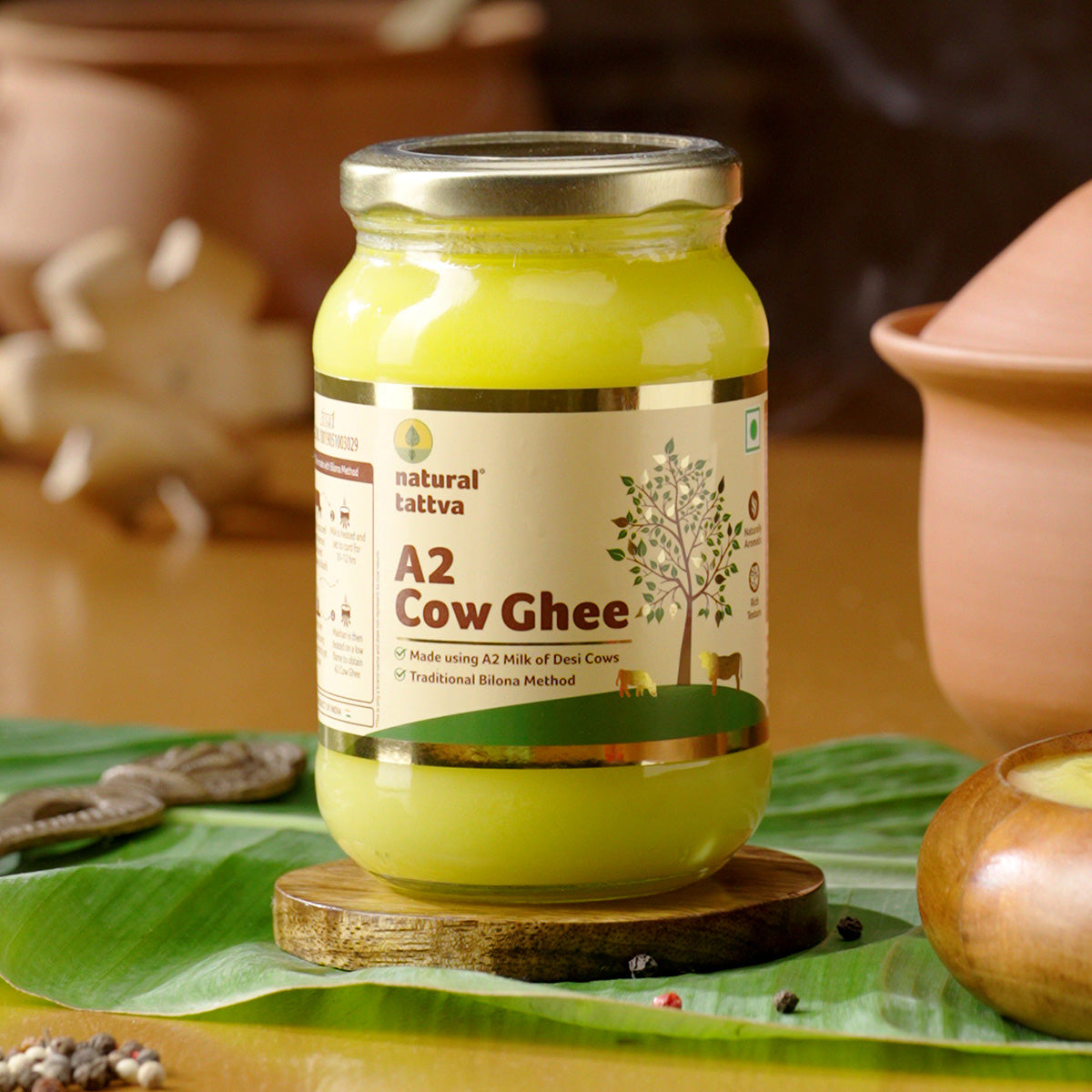
A well-stocked pantry makes Navratri fasting far easier to sustain. Organic Tattva's Natural Rock Salt (Sendha Namak) is a fasting staple that adds flavour without breaking your vrat, while the Organic Cow Ghee and A2 Cow Ghee bring the richness and easy digestibility that fasting cooking calls for.
For your festive sweets - kheer, halwa, or a simple jaggery-and-nut mix - Organic Tattva's jaggery and dry fruits add natural sweetness without any refined sugar. Building your vrat thali around clean, organic ingredients is one of the simplest ways to keep the festival's spirit of purity intact, right down to what's on your plate.
Frequently Asked Questions
What are the basic Navratri fasting rules?
The basic rule is to avoid regular grains, lentils, onion, garlic, and iodised salt, and to eat a sattvic diet made of fruits, dairy, sabudana, and flours like kuttu, singhare, and rajgira, seasoned only with sendha namak (rock salt).
Do you fast on the first and last day of Navratri?
Many people who cannot observe all nine days choose to fast only on the first day (Pratipada, when kalash sthapana is done) and the last day (Ashtami or Navami), treating these as the most important days of the vrat.
When should you break the Navratri fast?
Most households break their fast after Kanya Pujan on Ashtami or Navami, or on Vijayadashami itself. The exact timing depends on family tradition and the local panchang, so it varies from one household to another.
Can you eat corn during Navratri fasting?
It depends on your family's tradition. Strict vrat rules treat corn as a grain and avoid it, but in many North Indian households, corn flour and roasted or boiled corn are commonly eaten during the fast.
What is Navratri upvas and why do people observe it?
Navratri upvas is a nine-day fast observed to honour the nine forms of Goddess Durga. It is considered a way to purify the body and mind and to express devotion during the festival.
What foods are typically eaten during Navratri fasting?
Common Navratri foods include sabudana khichdi, kuttu ki puri, singhare ka halwa, fruit chaat, roasted makhana, paneer dishes, and sweets made with jaggery, all seasoned with rock salt instead of regular salt.
What time does Navratri end in 2026?
Navratri concludes on the ninth day, Navami, followed by Vijayadashami (Dussehra) on the tenth day. Exact dates and puja timings change every year based on the lunar calendar, so it is best to check a current panchang closer to the festival.